
Inside the Scott County Most Wanted Program
Scott County does not run a wanted-poster operation. What it has is a partnership: the Sheriff's Office teams with Crime Stoppers of Minnesota, a nonprofit that collects anonymous information about crimes and about people being sought. The county's Crime Stoppers page lays out every channel in one spot, including the possibility of a reward. The whole point is information. A neighbor, a witness, or a family member passes along what they know, and the program routes it to investigators without ever recording the caller's name. That job is nothing like the county's warrant line, where a person can ask directly about their own case or a relative's.
Why Scott County Has No Warrant Roster
Scott County posts no most wanted roster anywhere on its public pages. Its Jail and Warrants page offers a phone number, 952-496-8314, rather than a list, and the tip program collects information instead of displaying photographs. Minnesota's data rules explain part of that choice. Records in an arrest-warrant index can stay confidential until the person is in custody, served, or has appeared in court. A standing roster would fight that protection. It would also freeze a status that shifts as cases resolve.
Note: The absence of a public roster is not evidence that no warrant exists, and no county office has published a complete list.
How Scott County Most Wanted Lists Work
Where a sheriff does publish a most wanted list, it is a hand-picked subset: a few cases pulled from a much larger pool of open warrants, chosen to draw public attention when investigators need eyes on someone. Scott County publishes no list, so there is no update schedule to track either. Crime Stoppers of Minnesota runs the same model statewide, and cases move on and off its programs as arrests happen. Any figure quoted in a news story reflects a single moment, not a standing count of Scott County warrants. Go straight to the program page rather than relying on a saved copy of an older post.
Scott County Most Wanted Tips
Scott County offers four anonymous ways to submit a most wanted tip, and none of them records who sent it.
| Channel | How It Works |
|---|---|
| Statewide tip line | 1-800-222-TIPS (8477); answered by a live person around the clock, with no caller ID |
| Web tip form | Submitted on the Crime Stoppers Minnesota site and answered with a follow-up ID |
| Text message | Tip674 plus the message, sent to CRIMES (274637) |
| P3 Tips app | A free mobile app for submitting the same information |
The Crime Stoppers web tip page shows the blank form Scott County tipsters use and how follow-up works.
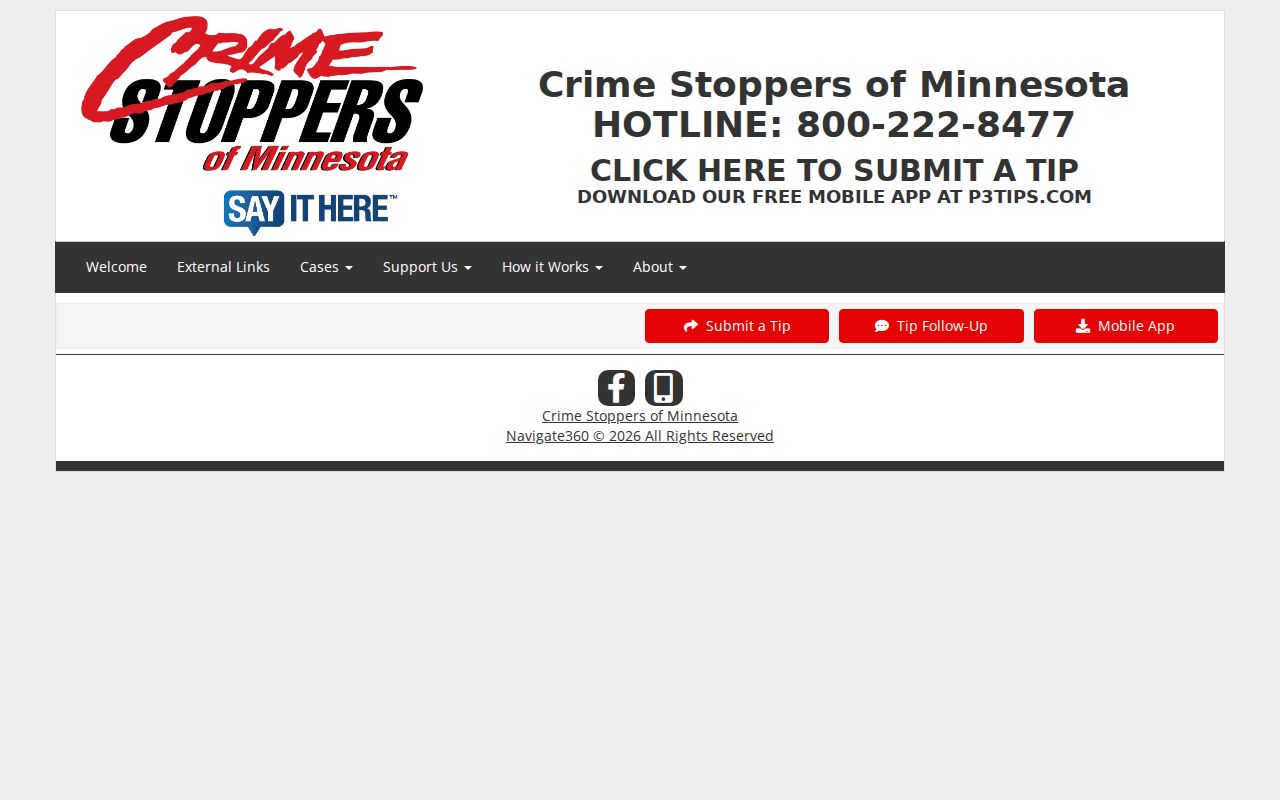
A tip form asks what the sender knows, not who the sender is.
Sending a Most Wanted Tip Safely
The design of the program is what keeps a sender safe. The tip line does not record a name or number. The web form assigns an identifier instead of an account, and the app keeps the sender out of the conversation unless they choose to return. Usefulness comes from detail investigators can verify: a location, a time, a vehicle description, a pattern of movement. Leave out guesses dressed up as fact, and the tip does more for Scott County investigators.
Key Point: Never approach a person you believe is wanted. Send what you know to the tip program or call 911 if there is immediate danger.
A crime unfolding right now needs a different channel than the Scott County tip program. Emergencies go to 911.
How Scott County Most Wanted Rewards Work
A Scott County tip may earn a reward of up to $1,000 if it leads to an arrest, according to the county page. The conditions live on the program page. The tip has to arrive before the arrest, and a board that oversees the program decides whether money is paid and how much. Anonymity survives the whole process, because the web form creates a unique tip identifier and password, letting a sender check back and claim a reward without giving a name. Rewards become available 90 days after the sender is notified, and they expire afterward. Nothing is guaranteed. The program describes the money as a possibility, never a fee.
How Most Wanted Differs From an Active Warrant
These are two different things. An active warrant is a status a court sets. A most wanted listing is a choice about which cases to publicize.
| Question | Most Wanted Program | Active Warrant |
|---|---|---|
| What it is | A tip channel and a curated set of highlighted cases | A court status on an open case |
| Who maintains it | Crime Stoppers and the Sheriff's Office | The issuing court and the law-enforcement record |
| How to confirm | Not applicable; send information only | Call the warrant unit or read the case file |
| What clears it | A tip does not clear anything | A court order, service, or case resolution |
A tip does not resolve a warrant, and it never appears on the case. For confirming a Scott County warrant, the active warrant search page covers the full process.
The P3 App and Scott County Warrant Checks
The P3 Tips app is a submission tool, nothing more. It sends information to the program, keeps the sender anonymous, and stores the follow-up identifier right on the device. It does not check court records, and it cannot look up warrant status for anyone. That distinction matters because the app is the easiest channel to open on a phone, so a first-time user might mistake it for a search tool. Scott County offers no warrant-check app of its own. For status questions, the warrant unit and the court are still the only stops. The P3 app page walks through the submission process.
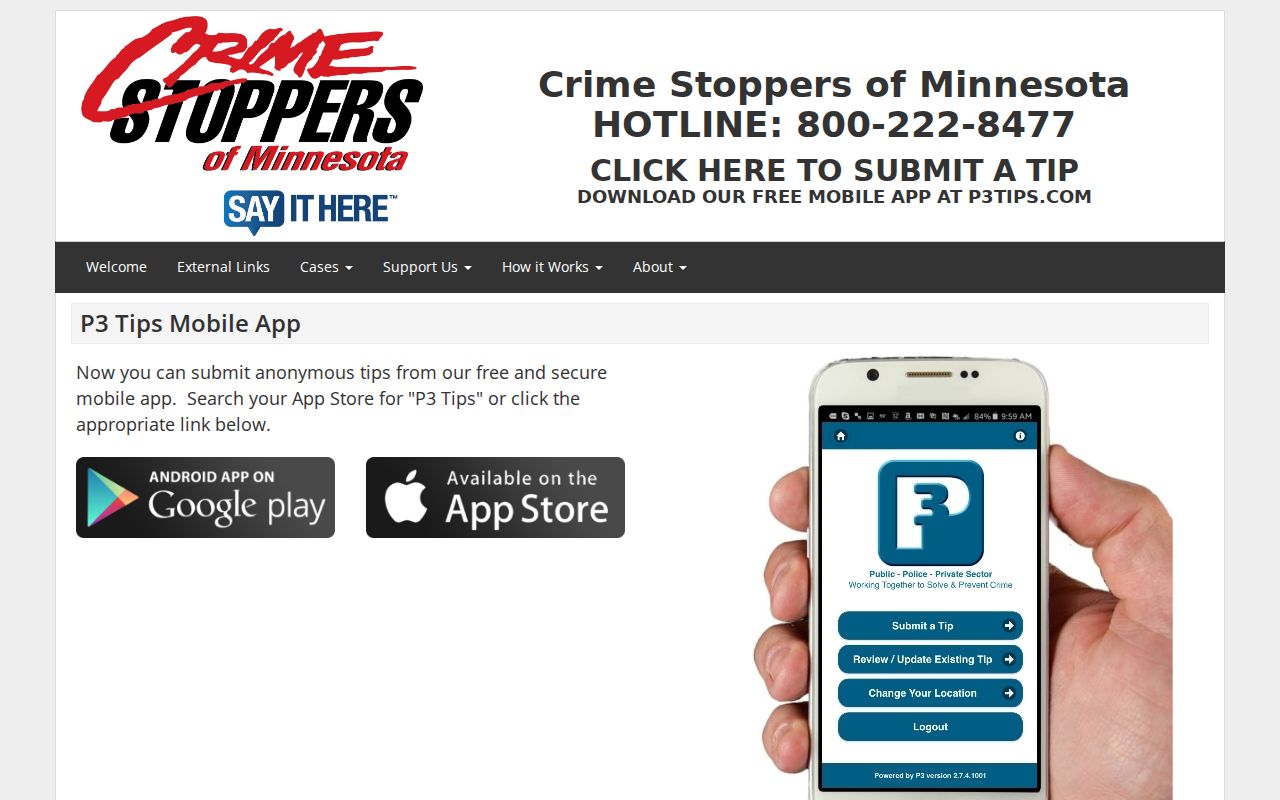
A tip app takes information in. Scott County warrant questions go to the sheriff's warrant unit or the court.
When You Believe You Are Listed
Discovering your name might sit in a wanted program is frightening. Asking the program about it is the worst move. Tip lines cannot confirm a warrant or clear one.
Important: Call the sheriff's warrant unit and Court Administration, and talk to a lawyer before appearing anywhere. Minnesota court guidance warns that an in-person visit can end in custody.
A Scott County warrant question starts with the warrant line: ask whether one is on file and what comes next. Then ask the court what the case record shows and how a new hearing date gets set. A defense lawyer rounds it out. A lawyer can request a recall, arrange a surrender, and explain what bond would require.
Federal Fugitive Warrants and Scott County Lists
The federal layer works much the same way. The U.S. Marshals Service district page for Minnesota covers Scott County, and it says plainly that no fugitive information is open to the public there. Access to the agency's internal warrant system is limited to authorized users with a need to know. Public federal case dockets exist through PACER and CourtListener, but a docket entry is not a wanted poster, and sealed material never appears. Operational warrant systems serve investigators. Public programs exist to collect tips. Neither one functions as a directory anyone can browse.
The 2019 Scott County Warrant Clinic
Crime Stoppers is not a safe-surrender program, and the county's tip program offers no relief from a court obligation. A person with an active warrant should not call a tip line to ask about it. Scott County has tried a resolution event before. The county calendar archive records a Law Day Warrant Resolution Clinic on May 1, 2019 at the Government Center, staffed by volunteer lawyers and legal aid groups. That clinic is history now. No standing amnesty week, safe-surrender window, or reduced-fee program exists today, so treat any current claim as unverified until an official Scott County announcement confirms it.