
Scott County Warrant Checks
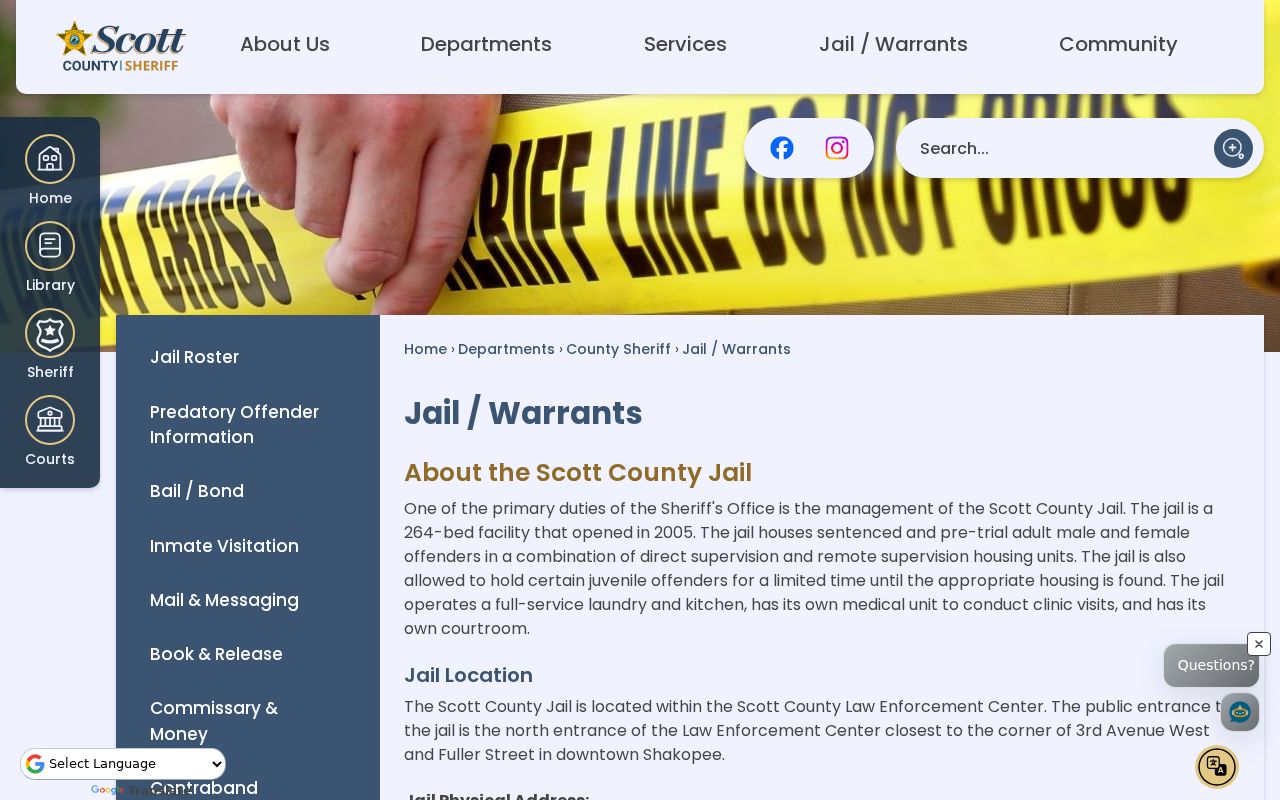
The county's own Jail and Warrants page has no search box. It publishes a phone number instead. A Scott County warrant is answered there, while a warrant from another Minnesota jurisdiction belongs to the office that issued it. That is the stated scope. So gather a legal name, a date of birth, and a case number before dialing.
- Confirm which county and court issued the case.
- Call the Jail and Warrants line at 952-496-8314 for the case number.
- Search Minnesota Court Records Online by case number and read the Register of Actions for a warrant or bond entry.
- Call Scott County Court Administration at 952-496-8200 for the court file.
- File a public-data request with Sheriff Records or the county's data request page.
- Call the city police records desk for a citation it wrote.
Note: Scott County posts no public active-warrant list, so the published route for a warrant check is a phone call.
How to Use the Scott County Warrant Line
The Jail and Warrants page places the Sheriff's Office Warrants Unit inside the Jail Division at the Law Enforcement Center, 301 Fuller Street South in Shakopee. The county publishes the number and the scope but not the counter hours or a walk-in surrender rule. The jail opened in 2005 with its own courtroom, which is why bail hearings happen across the street from the courthouse.
A good call covers four things: Is this a Scott County matter? What warrant type and case number appear? Is bond set? Which office handles the next step?
This county warrant page is short and phone-only.
Keep the case number handy when you dial.
Warrants in Scott County: The Main Types
Minnesota runs one unified District Court for the criminal and traffic cases filed in Scott County, so the warrant types you will meet are the ones a judge or magistrate signs there. The docket label tells you which one you face. An arrest warrant follows a complaint and a probable-cause review. A bench or FTA warrant follows a missed hearing, a missed summons, or a sentence violation. A sign-and-release warrant is statutory. It applies only to certain eligible cases.
| Warrant Type | How It Arises | Who Issues It |
|---|---|---|
| Arrest warrant | A complaint or indictment with probable cause | District Court judge or magistrate |
| Bench or FTA warrant | A missed hearing, missed summons, or sentence violation | The judge in the underlying case |
| Sign-and-release warrant | An eligible failure to appear under Minn. Stat. 629.415 | District Court |
| Release-condition warrant | A violation of conditions set at release | District Court |
| Search warrant | An order to search a place or thing | A judge, on a police application |
| Contempt warrant | A constructive-contempt affidavit under Minn. Stat. 588.04 | The court handling the civil case |
Across Minnesota sources, the working terms are warrant, bench warrant, and sign-and-release warrant; no Scott County source uses capias pro fine.
Minnesota's Missing Warrant Search
Minnesota offers the public no statewide active-warrant search. Minnesota Government Access is a login-restricted system for government partners, and its FAQ says plainly that it runs no all-active-warrants search. For case-level records, readers are pointed to MCRO. That shows one case at a time, not who holds an open warrant statewide. Scott County has the same gap. No published roster exists, so there is no update schedule to quote. A blank result usually means an incomplete identifier, a restricted category, or an unpublished record. It is not a clearance.
Note: Under Minnesota law, data in an arrest-warrant index can stay confidential until the person is in custody, served, or before the court.
Scott County Warrant Records: What They Show
A warrant record is really a court record with a law-enforcement layer added. Two offices each hold a piece. The Scott County court file carries the case number, the charge, the issuing judge, and the release decision. The Sheriff's Office keeps the booking and service side. Read the court fields first. Then confirm status by phone.
| Case Number | The public key to the District Court file |
|---|---|
| Warrant Type | The docket label: arrest, bench, sign-and-release, release-condition, contempt, or search |
| Charge | The offense description and its statute citation |
| Issuing Court | Scott County District Court and the assigned judge |
| Bond or Release Term | The bail amount, a condition, or an appearance-only bond |
| Status | Issued, outstanding, served, recalled, quashed, or discharged |
| Service and Return | The executing agency and its certification to the court |
No public Scott County warrant-number format was located, so keep the case number.
Scott County Warrant Status Codes
The status word on a Scott County warrant record decides what happens next, and several of them sound more final than they are.
- Issued
- The court created the warrant. Service is not yet shown.
- Outstanding or active
- The warrant is not shown as cleared in the record being read. Confirm it before acting.
- Served or executed
- An officer carried out the warrant and should certify the return. The case continues.
- Posted
- A bond was paid, which is a custody event, not a dismissal.
- Recalled, withdrawn, or quashed
- The court changed or canceled the warrant. Ask for the order.
Scott County Warrants: Who Issues, Who Serves
Judges and magistrates in Scott County District Court issue the warrants tied to cases filed here. Serving them is someone else's job. Under Minnesota Rule of Criminal Procedure 3.03, an authorized officer may execute a Minnesota warrant anywhere in the state, and must tell the person about the warrant and the charge. So a Scott County warrant might arrive through a sheriff's deputy, a city officer, or another peace officer. The flow is simple. The court issues, an officer serves, the jail books. The court then sets or confirms release.
Scott County Sheriff's Office Warrants Unit
Jail Division, Law Enforcement Center
301 Fuller Street South, Shakopee, MN 55379
952-496-8314
Scott County Warrant and Bond Route
Scott County's Bail and Bond page lays out a jail-lobby route plus an online option. In the lobby, bail can be paid by cash or credit card, and the Access Corrections service shows a Pay Bond option once bail is set. A licensed Minnesota bondsman may also post at the lobby. Bring the person's full name and date of birth. Bond-window hours and fees are not published. Call first. And remember what bond does: it answers the custody question. It neither changes the warrant nor ends the case.
Note: Ask the warrant line where bail is accepted and what identification is required before you travel to Shakopee.
Handling a Scott County Warrant
A Scott County warrant clears through a few lawful routes. Those are a defense attorney, a court-ordered recall or reset, a lawful surrender, and a bond where the court allows one. Minnesota Judicial Branch guidance carries a warning. A person who walks in to ask about a warrant can be taken into custody. So call the warrant line and Court Administration first. Then decide with a lawyer how and where to appear.
Important: Talk to a lawyer before turning yourself in. A court visit with an open warrant can end in custody, and the case still has to be answered.
Scott County Court Administration can tell you where a filing question goes. The assigned judge decides whether to recall, quash, or reset the warrant.
Scott County Bond Versus Warrant Clearance
These two steps get confused. A bond is a release decision: it settles custody while the case keeps moving. A recall or quash is a court order aimed at the Scott County warrant itself. Paying a fine is compliance only. The court still processes it, and no state source says a warrant expires on its own.
| Step | What It Changes | What It Leaves Alone |
|---|---|---|
| Posting bond | Release from custody, under court conditions | The pending case and the next hearing |
| Recall or quash order | The warrant itself | The case, unless the court resolves it too |
| Paying a traffic fine | The fine or compliance obligation | Warrant status until the court processes it |
Scott County once ran a Law Day Warrant Resolution Clinic on May 1, 2019, with volunteer lawyers and legal aid groups on hand. That clinic is history now, not a program you can still use.
Warrant Record Access Under Minnesota Law
Minnesota lets the public inspect and copy government data under the Minnesota Government Data Practices Act, Minn. Stat. ch. 13. The same law sorts data into categories, and some of those categories keep warrant details out of public view. In Scott County the work is split. The Sheriff's Office handles law-enforcement data, while Court Administration copies or certifies court records. Knowing which office holds the warrant record you want saves a call.
Key Rules:
Minn. Stat. 13.03 gives the public a right to inspect and copy public data.
Minn. Stat. 13.82 lets arrest-warrant index data stay confidential until custody, service, or a court appearance.
Minn. Stat. 260B.171 limits public access to juvenile delinquency records.
Minn. Stat. 260C.171 restricts child-protection records.
Privacy Limits on Scott County Warrant Records
Those privacy categories are why a Scott County warrant search can come back empty even when an active warrant exists. An arrest-warrant index entry may stay confidential until it is served. An open investigation can keep report data nonpublic. Juvenile files carry their own limits, and sealed material adds one more layer. The classification question goes to whichever Scott County office holds the record. There is no most-wanted roster here, but the county's Crime Stoppers page runs a tip line at 1-800-222-TIPS, plus a web form, texts to TIP674, and the P3 Tips app, with a reward of up to $1,000 possible after an arrest. The county most wanted page covers that program without listing names or photos, and a blank result on any search still does not prove that no warrant exists.
City Warrant Records in Scott County
Minnesota folds city cases into District Court, since the state has no separate municipal or justice-of-the-peace trial court. A city citation that turns into a warrant therefore lands in District Court no matter which Scott County city wrote it. What changes by city is who issues the citation and who keeps the police record. Start with the city that wrote it, then confirm the warrant with the county.
Shakopee Warrant Records
43,698 residents · county seat
Savage Warrant Records
32,465 residents · police on McColl Drive
Prior Lake Warrant Records
27,617 residents · police on Dakota Street SE
New Prague Warrant Records
8,162 residents · spans two counties
Belle Plaine Warrant Records
7,395 residents · police on Main Street East
Scott County Warrant Caseload Context
Scott County reported a 2020 Census population of 150,928. Its justice offices sit within a few blocks of each other in Shakopee, which is why the phone route makes sense at that scale.
Read that as a caseload measure, not a count of open warrants.